
A new broker usually sees the same scene early on. A business owner has work lined up, the current equipment is slowing jobs down, and the bank either said no or moved too slowly to matter. The owner doesn't need a lecture on capital structure. The owner needs a machine, a vehicle, a system, or a piece of software that can go to work now.
That's why equipment financing for small business is such a strong product to learn first. It solves a concrete problem, it's easier for owners to understand than many other funding products, and it gives a broker a clean way to create value fast. One funded deal can turn into repeat business, vendor relationships, and referrals from owners who remember who helped them keep operations moving.
Table of Contents
- The Billion-Dollar Opportunity in Your Backyard
- What Is Equipment Financing and Why It's a Broker's Best Friend
- The Four Main Types of Equipment Financing You Can Offer
- Your Step-by-Step Guide to Funding a Deal
- Qualifying Your Client by Understanding Lender Criteria
- Advanced Strategies to Maximize Your Commissions
- Become the Go-To Funding Expert in Your Niche
The Billion-Dollar Opportunity in Your Backyard
A landscaping company lands bigger commercial work and needs another excavator. The owner has deposits coming in, crews ready to go, and jobs that can't be handled efficiently with the current setup. A traditional bank slows the process down or rejects the request because the file doesn't fit the bank's box. That gap is where a broker steps in.
This isn't a niche corner of lending. The Equipment Leasing & Finance Foundation estimated the equipment finance industry at $1.34 trillion in 2023, and about 57.7% of all equipment and software investment was financed, which shows how often businesses acquire productive assets through borrowing instead of paying cash upfront, according to the Foundation's equipment finance market outlook.
For a broker, that matters for one reason above all others. Equipment isn't optional for many clients. If a restaurant needs refrigeration, a contractor needs machinery, or a service business needs vehicles, the purchase is tied directly to revenue. Owners act faster when the funding request is attached to a visible business need.
A newer broker also gets an advantage here that doesn't exist in every product category. Equipment financing conversations are concrete. The client knows what's needed, the vendor often has a quote, and the use of funds is clear. That makes the file easier to package and easier to discuss with lenders.
Where the opportunity shows up fastest
Some of the best early broker opportunities come from businesses that are already operating but hit a growth wall because they lack the right asset.
- Expansion deals: A company has demand but can't take more work without another machine, truck, or production unit.
- Replacement deals: Old equipment keeps failing and is hurting scheduling, labor efficiency, or customer service.
- Startup infrastructure deals: A newer business may have a real need for core operating equipment before revenue smooths out.
- Location build-out support: Soft costs around a project can create cash pressure even when the owner can handle monthly payments.
A practical way to spot adjacent opportunities is to study niche examples like restaurant equipment financing scenarios. The asset changes by industry, but the broker's role stays the same. Identify the bottleneck, structure the request properly, and move the file to a lender that understands the collateral.
The broker who can translate “we need this machine now” into a fundable package becomes useful very quickly.
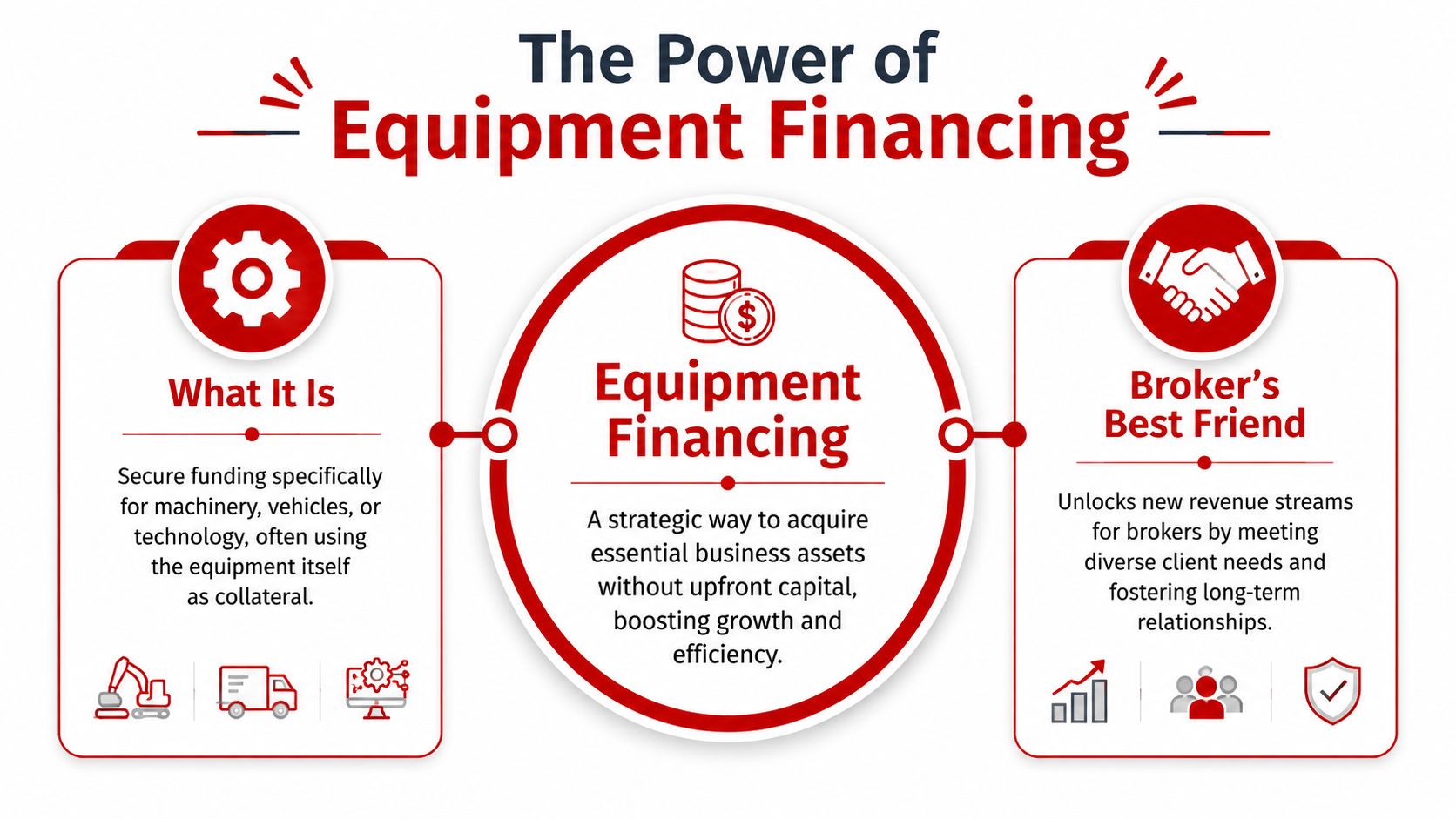
What Is Equipment Financing and Why It's a Broker's Best Friend
Equipment financing for small business works a lot like a vehicle loan. The money is used to acquire a specific asset, and that asset usually helps secure the deal. The lender isn't just evaluating the business in the abstract. The lender is also looking at the equipment being purchased and what it's worth.
That asset-backed structure is why this product opens doors for clients who might struggle with unsecured working capital. The purchased equipment typically serves as collateral, which lowers lender risk, and some providers allow application-only underwriting for smaller tickets, sometimes up to $250,000 for equipment, as explained in this equipment collateral and underwriting overview.
Why owners say yes to it quickly
Owners usually understand this product faster than they understand general-purpose business financing. The conversation starts with a piece of equipment they already want, not with vague “access to capital” language.
That changes the sales dynamic.
- The use of funds is obvious: The client can point to the machine, vehicle, software package, or system being purchased.
- The business purpose is easier to explain: More capacity, faster production, less downtime, or a needed replacement.
- The payment logic is cleaner: The owner can compare the monthly obligation against the expected value of the equipment in operations.
When a broker presents equipment financing well, the owner doesn't feel pushed into debt. The owner sees a path to acquire something productive without draining cash reserves in one shot.
Why brokers like these files
This product is a broker's friend because it's easier to position, easier to pre-screen, and often easier to place than unsecured requests.
A broker can explain the deal clearly. The lender is financing a tangible business asset. That tends to create more flexible underwriting paths than a request built only on projected performance or broad working capital needs.
Practical rule: If the asset is standard, useful, and easy to value, the deal usually gets simpler.
There's also a relationship angle. A client who gets a vehicle, machine, or critical system financed through a broker often comes back for other needs later. The first transaction isn't just a funded deal. It can become the start of a broader financing relationship.
For brokers building product fluency, reviewing examples of how equipment leasing requests are structured helps sharpen the conversation. The key is to explain the structure in plain language. If a client can understand why the asset makes the deal safer for the lender, the broker already sounds more credible than most generic sales pitches.
The Four Main Types of Equipment Financing You Can Offer
A client calls because a lift truck died, a delivery van needs replacing, or a shop finally landed enough work to justify a second machine. Your job is not to pitch every option. Your job is to choose the structure that solves the operating problem without creating a payment problem six months later.
That is where newer brokers either build trust fast or lose the deal.
How each option fits a different deal
Equipment loans
Equipment loans fit clients who want to buy a specific asset and keep it for most of its useful life. The lender finances the purchase. The client makes fixed payments and usually owns the equipment after payoff.
This is often the cleanest file to explain and close. The asset is clear, the use case is clear, and the end goal is clear.
Good fit:
- Long-life assets: Manufacturing equipment, construction machinery, work vehicles, and other equipment the client expects to use for years.
- Ownership-driven clients: Owners who care about keeping the asset once the term ends.
- Straightforward projects: One quote, one vendor, one defined purchase.
The trade-off is simple. A loan usually works best when the client is comfortable carrying the asset long term, even if technology or usage needs change later.
Equipment leases
A lease works well when the client wants use more than ownership. That matters in industries where equipment becomes outdated quickly, maintenance risk rises with age, or the business wants to preserve cash for payroll, inventory, or marketing.
From a broker's side, leases save deals that would otherwise die on monthly payment pressure. A purchase may be technically possible but still wrong for the client's cash flow. A lease can lower the initial burden or create more flexibility at end of term, depending on structure.
Ask better questions here:
- Will this equipment still be the right fit in three to five years?
- Does the client want lower payments more than long-term ownership?
- Is cash preservation part of the goal?
If the answer is yes, a lease deserves a serious review.
SBA-backed equipment financing
SBA-backed structures belong in a different bucket. These are not the first files I reach for when the client needs a fast approval on a standard piece of equipment. They make more sense when the request is larger, the repayment term needs to be stretched, or the equipment purchase is tied to a broader business plan.
The U.S. Small Business Administration outlines the general size limits of its core programs on its SBA loan program overview pages. That matters because some clients do not need a simple equipment note. They need a more formal program that can support a larger project.
The trade-off is time and documentation. SBA-backed deals can be strong deals, but they usually require better financials, cleaner packaging, and a client who can tolerate a longer process.
Equipment lines of credit
An equipment line of credit fits clients who buy in stages instead of all at once. You will see this with contractors replacing smaller tools over time, medical practices adding units as patient volume grows, or operators buying multiple pieces across a rollout.
This product can be valuable for your book of business because it creates repeat touchpoints. One approval can lead to multiple funded draws instead of one transaction and silence. Before you submit this kind of request, run the payment scenarios with a business-building loan calculator for equipment and term structures so your client understands what repeated use does to monthly obligations.
The caution here is discipline. A line gives flexibility, but some clients are better served by a defined term loan if their buying plan is already clear.
Equipment Financing Options at a Glance
| Financing Type | Best For | Ownership | Typical Broker Benefit |
|---|---|---|---|
| Equipment Loan | Long-use equipment with clear purchase intent | Usually yes after payoff | Straightforward positioning and packaging |
| Equipment Lease | Clients prioritizing flexibility or refresh cycles | Varies by structure | Gives you another path when a purchase does not fit cash flow |
| SBA-Backed Financing | Larger requests or deals tied to a broader expansion plan | Often ownership-oriented | Helps you serve more complex clients with bigger financing goals |
| Equipment Line of Credit | Repeated or staged equipment purchases | Varies by draw and use | Supports repeat funding activity and stronger client retention |
You do not need to master every variation on day one. You do need to stop treating all equipment files the same. Brokers who learn that distinction close more deals, protect relationships, and turn one urgent equipment request into a client who keeps coming back.
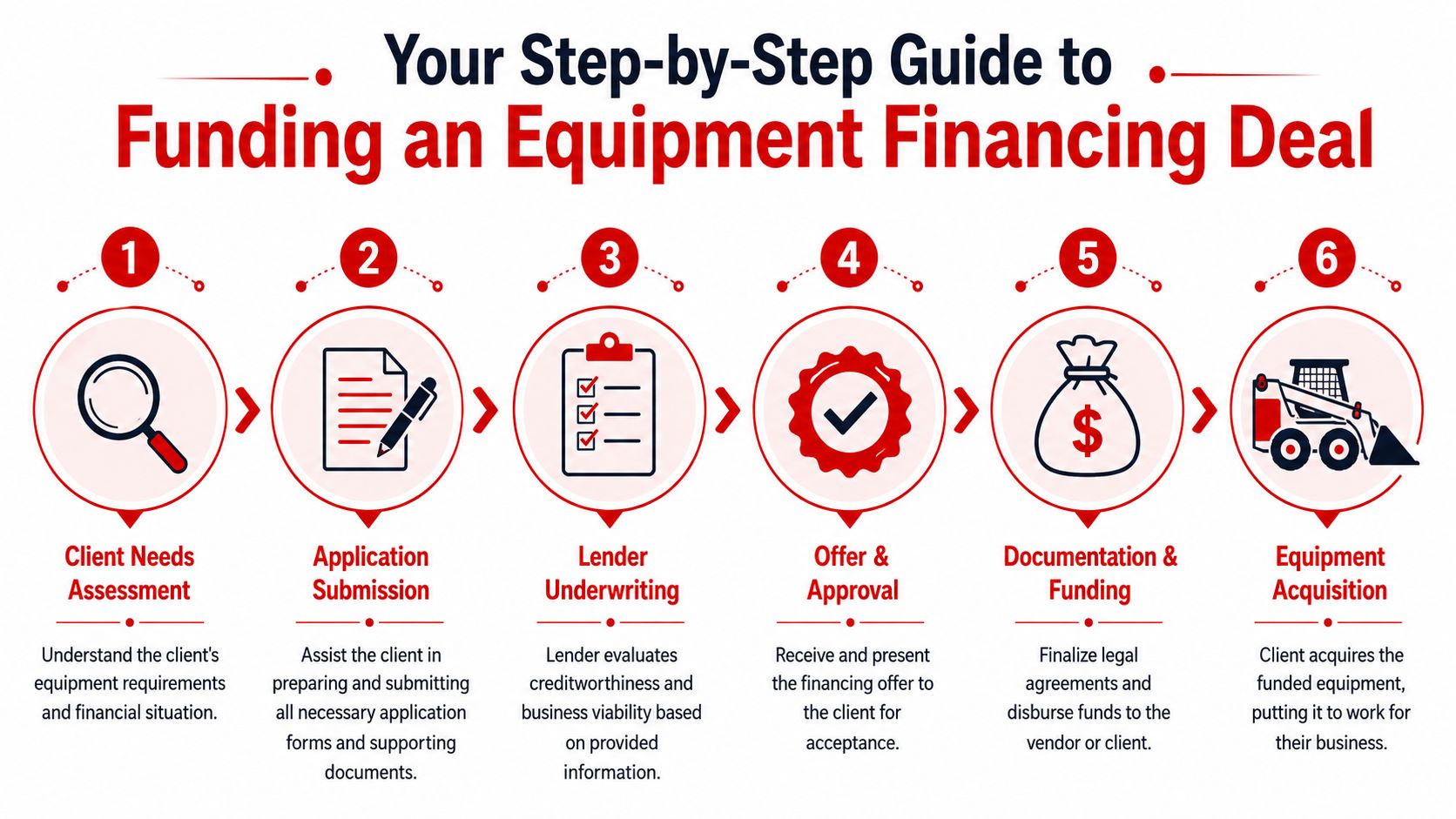
Your Step-by-Step Guide to Funding a Deal
A funded equipment file usually moves best when the broker keeps the process simple, document-driven, and centered on the asset. Confusion kills speed. Missing vendor details kill speed even faster.
Start with the equipment, not the application
The first conversation should clarify what the client is buying, why it's needed, how soon it's needed, and whether the quote is complete. A broker can't structure the deal properly if the project details are fuzzy.
A clean intake usually includes:
- The asset description: What exactly is being purchased.
- The vendor quote: Equipment cost, itemization, and any related charges.
- The business story: Why the equipment matters operationally.
- The timing pressure: Whether the client is replacing failed equipment, expanding capacity, or trying to secure inventory quickly.
Many newer brokers often lose momentum. They jump into lender submission before checking whether the quote matches the actual project cost or whether the client even has the correct vendor paperwork.
Move the file cleanly through underwriting
Once the request is clear, the broker's job is to package it in the least confusing way possible. If the deal is straightforward, many online lenders and alternative providers can provide answers within 24 hours and fund deals in as little as 48 hours, as noted in this bank guidance on equipment financing timelines.
That speed matters, but only if the file is clean.
- Confirm business details early: Legal name, entity status, and operating information should match supporting records.
- Check vendor documentation: Quotes should be current, legible, and specific enough for underwriting.
- Prepare the client for verification: Lenders may want asset details, photos, or serial information depending on the transaction.
- Set expectations on timing: Fast decisions usually happen on cleaner, lower-complexity files.
A practical way to stay organized is to run the transaction through a payment scenario before submission. Using a business building loan calculator can help a broker frame monthly payment sensitivity and talk through structure before the lender does.
A repeatable closing workflow
A broker who wants more funded deals needs a routine, not improvisation.
- Pre-screen first: Confirm the client, asset, and use case fit equipment finance.
- Build a concise package: Don't overload the lender with irrelevant paperwork.
- Match the file carefully: Fast file to fast lender, complex file to patient lender.
- Present offers clearly: Monthly payment, term, ownership path, and any out-of-pocket costs should be plain.
- Stay close through docs: Many deals stall after approval because the client stops moving.
A broker's value often shows up after approval, not before it. That's when clients need help understanding what they're signing and what happens next.
The commission arrives after the hard part is done correctly. The smoother the process feels to the client, the more likely that client is to send the next referral.
Qualifying Your Client by Understanding Lender Criteria
A client calls at 10 a.m. because a truck is down, a machine failed, or a new contract starts next week. New brokers hear urgency and rush to submit. Experienced brokers slow the file down just enough to qualify it properly. That is how you protect your close rate and build a reputation for bringing lenders financeable deals.
Equipment finance is often more approachable than other commercial products, but that does not mean every request is lender-ready. The gap between "needs equipment" and "can get approved on workable terms" is where your judgment matters. If you learn to spot that gap early, you save time, place files more accurately, and create a better client experience.

What underwriters focus on first
Underwriters are trying to answer one practical question. If they approve this transaction, do the borrower, the equipment, and the story all hold together?
They usually start with a few pressure points:
- Time in business: Is the company active, operating, and reasonably stable?
- Cash flow: Can the business support the proposed payment without obvious strain?
- Credit profile: Does the owner or business show a pattern of paying obligations acceptably for the program?
- Collateral quality: Is the equipment standard, useful, and easy to resell if needed?
- Transaction logic: Does the asset fit the client's actual business operations?
- Documentation consistency: Do the application, quote, bank statements, and business details match?
Asset quality matters more in this product than many new brokers expect. A late-model excavator, box truck, or CNC machine is easier to finance than a one-off custom build with a thin resale market. Specialized equipment can still get done, but approval may come with more conditions, a larger down payment, or a narrower lender pool. That trade-off should be part of your client conversation early, not after approval terms come back weaker than expected.
How to pre-qualify without wasting anyone's time
A strong pre-qual call feels like a credit interview with sales awareness. You are not just collecting facts. You are testing whether the file has the ingredients for approval and whether the client is serious enough to move.
That is also where brokers separate inquiries from real opportunities. The signal stacking framework is useful here because one buying signal rarely means much by itself. An urgent need, a signed vendor quote, a clear revenue use case, and responsive document turnaround together point to a fundable deal.
Use questions that expose both credit strength and readiness:
- What triggered the request? Replacement, expansion, new contract, seasonal demand, or equipment failure all imply different urgency and approval paths.
- What does the equipment do for revenue or operations? Lenders like a clear business reason, and so should you.
- What are the current monthly obligations? Existing debt affects payment capacity and structure.
- How clean is the file? Outdated quotes, mismatched business names, and vague ownership details slow approvals.
- How fast can the client document? A strong file can still die if the borrower cannot verify basic details quickly.
Review liabilities early. A broker who can read the borrower's full payment picture will place more deals correctly and avoid preventable declines. If you need a clean method, use a debt schedule review process to see where current obligations may crowd out the new payment.
Here is the practical standard. You want need, repayment ability, and documentation quality in the same file.
A borrower can have strong revenue and still miss because the quote is unusable. Another borrower may have average credit but win approval because the equipment is strong, the business use is clear, and the package is clean. That is why good brokers do not qualify by one factor alone. They qualify by the whole credit story.
Your client does not need a perfect file. Your client needs a file that makes sense to a lender and can survive scrutiny. That is the standard you should coach toward every time.
Advanced Strategies to Maximize Your Commissions
Average brokers quote the equipment and wait. Strong brokers look for the hidden parts of the transaction, the underserved borrower, and the referral source standing beside the deal.
Stop quoting equipment only
One of the easiest ways to under-serve a client is to finance only the sticker price of the asset while ignoring the rest of the project. Some lenders allow financing of up to 125% of the equipment's cost to include soft costs like installation and taxes, as explained in this equipment financing guide covering soft costs.
That changes the broker's role.
A client may think the issue is “Can this machine be financed?” The primary concern might be whether freight, setup, taxes, training, or installation will force an out-of-pocket cash hit that ruins working capital. A broker who asks better questions can structure a better deal.
A stronger discovery conversation includes:
- Project cost review: Ask what has to be paid besides the equipment itself.
- Vendor coordination: Confirm whether the quote includes delivery, setup, and related charges.
- Cash preservation discussion: See whether the client wants to minimize upfront spend or just secure approval.
- Post-close usability: Make sure the equipment can be put into service without another funding scramble.
Build repeatable referral channels
The most sustainable equipment financing business usually comes from referral relationships, not random one-off inquiries. Equipment vendors, industry consultants, service providers, and local business advisors often know who needs equipment before a financing search even starts.
That's where a broker can create a durable niche. Show up as the person who can evaluate the deal quickly, communicate clearly, and keep the vendor informed without creating noise.
A practical outreach habit is to tighten the first contact message instead of sending broad generic pitches. For brokers refining that skill, these Salesmotion tips for sales emails are useful because they reinforce clear messaging, relevance, and structure in prospecting.
A vendor doesn't care about lender jargon. The vendor cares whether the broker helps good buyers get to the finish line.
There's another overlooked opportunity here. Smaller, newer, or thinner-file businesses often get dismissed too early. Those borrowers may still have a path if the asset is strong, the file is realistic, and the structure fits. Brokers who learn how to work these files carefully often face less competition and build stronger loyalty because they solved a problem others brushed off.
The commission grows when the broker's usefulness grows. Better structuring, better referrals, and better positioning lead to more funded deals without turning the business into a volume game built on bad-fit submissions.
Become the Go-To Funding Expert in Your Niche
Equipment financing for small business is more than a loan category. It's a practical entry point into a serious brokerage business because it solves urgent, visible problems for real companies. Owners need revenue-producing assets. Brokers who can package and place those requests become valuable fast.
This product also teaches the right habits. It trains a broker to ask sharper questions, collect cleaner documents, match files to the right lending path, and build referral relationships with people who influence buying decisions. That combination is what creates a sustainable business, especially for someone working remotely and building a home-based operation.
The strongest part of this niche is that it doesn't rely on hype. A broker doesn't need to promise miracles. The broker needs to understand the asset, understand the client, and guide the transaction from quote to funding with discipline.
That's how a newer broker starts earning trust. It's also how a small book of equipment deals can turn into a broader referral-driven lending business over time.
Business Lending Blueprint shows aspiring brokers how to build that kind of business step by step. For anyone who wants to work remotely, help business owners secure funding, and create a referral-driven income stream without guessing their way through lender relationships and deal structure, the next move is to watch the free training at Business Lending Blueprint or schedule a strategy session.