Most advice on business broker leads is stuck in the same loop. Buy a list. Start dialing. Push harder when people ignore the first message. That approach burns time, lowers morale, and trains new brokers to believe the business depends on constant interruption.
A better model exists. It fits the way serious business owners make decisions. They respond to trust, relevance, timing, and introductions from people they already know. That matters even more for anyone building a home-based brokerage around flexibility, low overhead, and repeatable systems instead of nonstop prospecting.
A referral-driven lead engine does more than fill a pipeline. It creates a business that can operate remotely, compound through relationships, and keep producing opportunities without turning every day into a call marathon.
Table of Contents
- The Untapped Goldmine in Business Brokering
- Define Your Ideal Lead Before You Seek Them
- Build Your Unstoppable Referral Lead Engine
- Attract Inbound Leads with Strategic Content
- Your Conversion Funnel Scripts and Systems
- Qualify Leads and Scale Your Broker Business
The Untapped Goldmine in Business Brokering
The biggest myth in this space is that lead generation starts with cold outreach. It doesn't. It starts with market structure. If the market is large, growing, and underserved, the winning move isn't louder prospecting. It's building a system that puts trusted conversations in front of people who already need help.
That opportunity is unusually strong in business brokering. The global business broker market is projected to reach $11.33 billion by 2033, and 80% of business sales are currently conducted without professional brokers, which leaves a massive untapped market for lead generation according to business broker industry growth projections. Those two facts explain why so many new entrants focus on volume. They see a wide-open field and assume brute force is the answer.
It isn't. A wide-open market rewards systems, not chaos.
Why the untapped market favors relationship builders
A broker who depends on random outreach starts every month from zero. A broker who builds referral pathways, simple follow-up systems, and a clean online presence builds an asset. That's the difference between chasing leads and owning a lead engine.
Many business owners don't wake up looking for a broker. They start with a problem. Cash flow pressure. Expansion timing. Exit planning. A financing gap. A partner disagreement. A trusted advisor often hears about that problem first. When that advisor knows who to call, high-intent leads appear without cold pitching.
Practical rule: The best business broker leads rarely feel cold. They arrive wrapped in context.
That also makes this model a strong fit for people building a remote brokerage from home. The work becomes more about relationship management, content, qualification, and process. It becomes less about trying to force conversations with strangers who never asked for one.
Build the business around intent, not interruption
A practical lead strategy has two jobs. It needs to bring in opportunities, and it needs to convert them efficiently once they arrive. The website, messaging, referral conversations, and follow-up process all need to support that goal. Small improvements in trust signals and page structure can boost website conversions before a broker spends more money or time on traffic.
For entrepreneurs exploring a remote brokerage model, the faster path is usually learning how to package the offer, identify the right business owners, and build referral partnerships around a specific funding need. A useful starting point is this walkthrough on how to start a loan business, especially for anyone who wants a service business that can scale from home without heavy infrastructure.
Define Your Ideal Lead Before You Seek Them
Most brokers miss here. They say they help “small businesses” and leave it at that. That sounds flexible, but it creates weak messaging, poor referrals, and lead lists full of people who aren't a fit.
Strong business broker leads start with a clear profile. That profile should describe the owner, the business, the funding situation, and the trigger event that makes action likely.

Start with the funding problem
A useful profile begins with the problem being solved. That forces specificity.
Some brokers target owners who need working capital quickly. Others focus on equipment financing, expansion funding, startup capital, or consolidation options. Each path attracts different owners, different urgency levels, and different referral partners. A contractor looking for equipment financing doesn't respond to the same language as a medical practice owner trying to stabilize cash flow.
Use a simple screen:
- Business type: Pick industries already familiar to the broker or common in the local market.
- Primary need: Define the financing issue in plain language.
- Decision-maker access: Focus on businesses where the owner or principal can be reached directly.
- Referral visibility: Prioritize situations where outside professionals usually spot the need early.
A broker who wants higher-quality conversations should narrow further. Instead of “any business needing money,” target “service-based firms with repeat revenue and an owner actively trying to solve a timing gap.” That language creates a far better fit.
Generic targeting creates generic leads. Narrow targeting creates recognizability. Referral partners remember recognizability.
Match business owners to referral partners
Once the owner profile is clear, the referral map becomes easier to build. Every lead type has people around it. Accountants, tax professionals, insurance agents, attorneys, consultants, payroll providers, real estate professionals, and bankers all hear different versions of financial stress or growth planning.
A simple matching framework helps:
| Business owner situation | Best referral partner to approach first | Why it works |
|---|---|---|
| Cash flow gaps | Accountant or bookkeeper | They often see the problem before the owner takes action |
| Expansion plans | Commercial real estate professional or consultant | They hear about growth moves early |
| Equipment purchase | Industry vendor or advisor | They know when financing is blocking the deal |
| Ongoing capital needs | Tax, payroll, or insurance professional | They maintain recurring contact with the owner |
This also improves content, networking, and follow-up. Every message gets sharper when the broker knows exactly who should respond and why. Anyone building this kind of list should also study working capital leads, because lead quality improves dramatically when the funding need is defined before outreach begins.
Build Your Unstoppable Referral Lead Engine
Cold outreach can produce conversations. It rarely produces a durable business. Referral systems do. They create trust before the first call, reduce friction in the sales process, and keep bringing in business broker leads long after the initial networking effort.
The underused edge is simple. While most guides push cold calling, data shows a “Core 12” referral network yields the lowest cost-per-lead and highest trust, as noted in this referral-focused business broker lead strategy. Many recognize the value of referrals. Few build them systematically.
Build the right partner mix
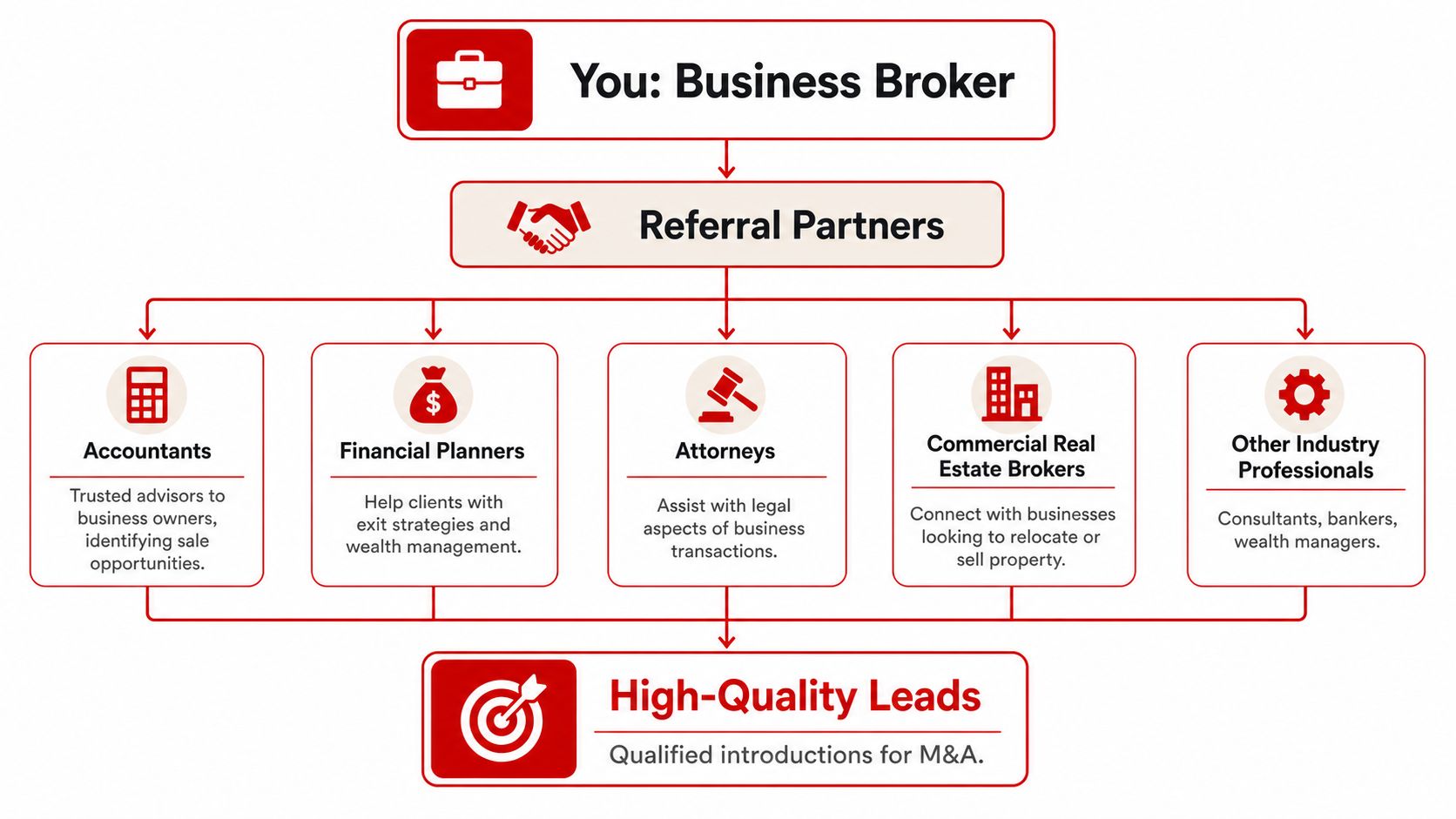
A referral engine shouldn't depend on one heroic partner. It needs range. The best mix includes professionals who already have trusted access to business owners during moments of change.
A practical network often includes:
- CPAs and tax professionals: They hear about cash flow pressure, seasonal dips, and expansion plans early.
- Attorneys: They see ownership changes, disputes, entity restructuring, and transactions in motion.
- Financial advisors and wealth professionals: They hear long-range goals and liquidity concerns.
- Commercial real estate professionals: They often know when a business is relocating, expanding, downsizing, or preparing for a sale.
- Insurance agents and payroll providers: They maintain recurring contact and can spot stress before a crisis.
- Consultants and local business service providers: They hear operational pain points that lead to financing needs.
The point isn't to collect contacts. The point is to create relevance. Each partner needs a clear reason to remember the broker.
Use a simple partner outreach rhythm
This part fails when brokers lead with “send me deals.” That puts all the work on the partner and gives them no reason to engage.
A better rhythm looks like this:
- Start with a narrow use case. Explain who the broker helps best.
- Make the partner look good. Position the relationship as a way for them to solve a client problem quickly.
- Offer a light first step. A short call, co-branded checklist, or educational conversation works better than an open-ended ask.
- Follow up with useful material. Send a short summary they can forward when the right client appears.
- Stay visible. A monthly check-in is usually enough when the message is specific.
Referral partners don't need a full presentation. They need a memory trigger.
Local visibility supports this system. A partner who hears the broker's name and then finds a clean online footprint is more likely to make the introduction. That makes local positioning worth the effort, especially when the broker uses a practical guide for local search optimization to align service pages, city terms, and referral-oriented content.
What strong referral language sounds like
Weak language sounds broad and needy. Strong language sounds useful.
Examples:
- “When one of your clients is profitable but stuck waiting on receivables, there's a funding path that doesn't require them to stall growth.”
- “If a business owner wants to expand but the bank process is too slow, there's a way to keep momentum without guessing.”
- “When a client gets declined or under-served by a traditional lender, a second option can preserve the relationship you already built.”
That language helps the partner identify moments, not memorize services.
Relationship-driven lead systems also depend on reputation after the handoff. Brokers who communicate clearly, set expectations, and protect the partner relationship keep the door open for future referrals. These customer care best practices matter because one sloppy client experience can shut down an otherwise productive referral channel.
Attract Inbound Leads with Strategic Content
Referral systems work faster when content supports them. A business owner gets an introduction, looks up the broker, and sees useful material that confirms competence. A referral partner sends a link instead of writing a long explanation. Content doesn't replace relationships. It multiplies them.
That matters because lead behavior has changed. Over 72% of modern brokers now generate their primary leads through digital channels, and LinkedIn accounts for more than 45% of B2B broker connections, according to this digital lead generation report for brokers. Owners and referral partners both validate expertise online before replying.
Use content to support referrals
The biggest mistake is treating content like a media business. It isn't. For a broker, content should answer real funding questions and reduce hesitation.
Useful formats include:
- Short LinkedIn posts: One financing scenario, one lesson, one next step.
- Referral-partner emails: Brief updates on what types of businesses are a strong fit right now.
- Owner-facing checklists: Plain-language guides that help a prospect prepare for a funding conversation.
- FAQ posts: Direct answers to common questions about timing, qualification, documentation, or lender fit.
A good post doesn't try to impress everyone. It helps the right person say, “This is exactly what that client has been asking about.”
Content should sound like client guidance, not branding copy.
Keep the publishing cadence realistic
A broker doesn't need constant output. Consistency matters more than volume. One thoughtful post, one email to referral partners, and one repurposed client education piece can be enough to stay visible.
A simple content workflow works well:
| Weekly action | Purpose |
|---|---|
| Publish one short insight | Builds authority with business owners and partners |
| Send one relationship email | Keeps referral sources aware of current fit |
| Update one website page or FAQ | Improves clarity and supports inbound conversion |
| Reuse one prior idea in a new format | Saves time and reinforces the message |
If a broker wants to turn a written insight into a simple visual asset without spending hours producing creative, ShortGenius automated ad generation can help turn one message into usable promotional content for social channels. The message still has to be strong. The tool only helps package it faster.
The best inbound strategy is quiet and disciplined. Show up where owners and advisors already spend time. Answer practical questions. Keep the tone grounded. Over time, the broker stops needing to “introduce” the business from scratch because the market starts recognizing what the broker does.
Your Conversion Funnel Scripts and Systems
Lead generation gets too much attention. Conversion systems create income. A referral, inquiry, or inbound message has little value if the broker responds slowly, asks vague questions, or forgets to follow up.
The strongest operators use a basic process and run every lead through it. No guesswork. No sticky notes. No relying on memory.
A disciplined approach matters because multi-channel outreach is critical, skipping calls can reduce conversion rates by 50%, and texting leads produces significantly higher response rates than email according to this business broker outreach methodology. That doesn't mean reverting to a cold-calling grind. It means using the right sequence once a lead shows intent.
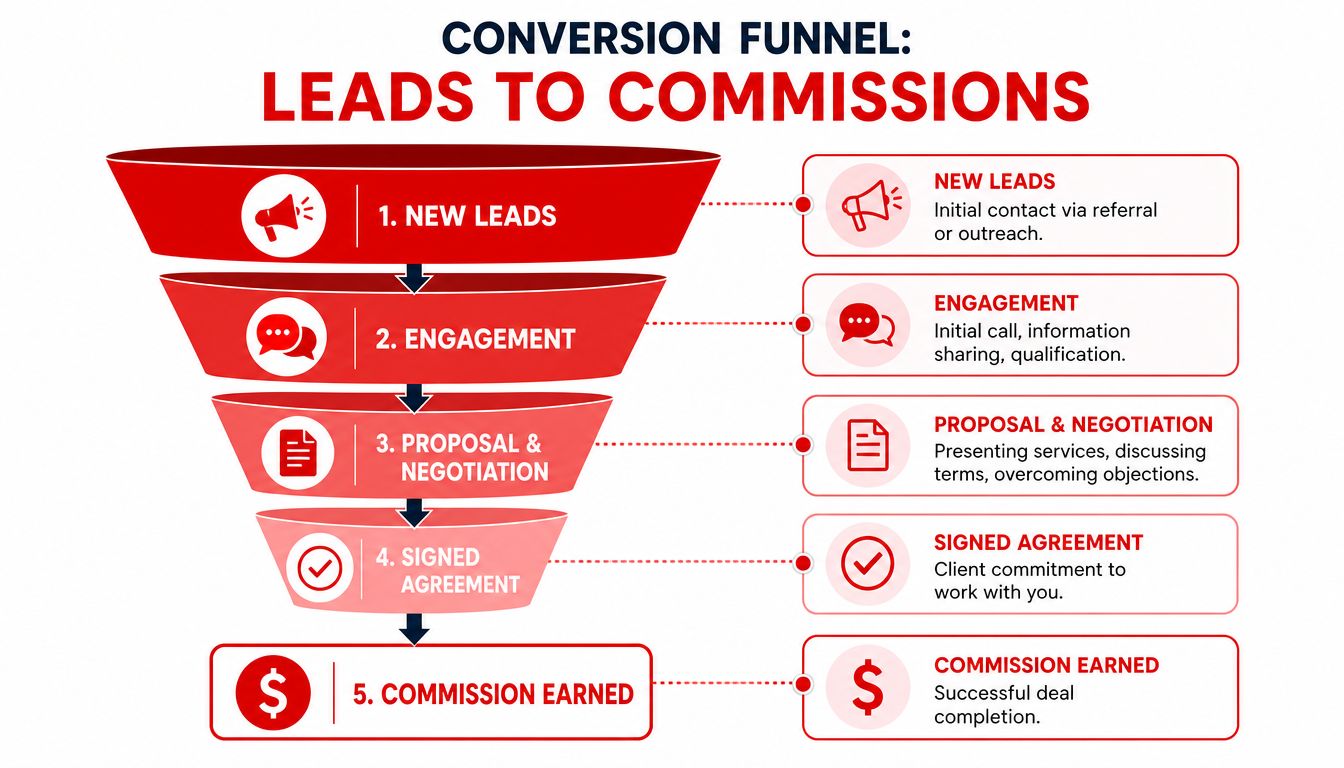
Build a five-stage pipeline
A simple funnel is enough:
New lead
Referral came in, form submitted, or direct inquiry arrived.Contact made
The broker reached out by text, call, or email and confirmed interest.Qualified conversation
The broker understood the business, need, timing, and decision-maker.Application or document stage
The prospect moved into a real funding process.Funded or closed-lost
The outcome got recorded so the broker can improve the system.
A spreadsheet can manage this at first. A dedicated CRM helps later. What matters is visibility. Every lead should have an owner, a status, a next action, and a date.
Use scripts that sound human
A referral lead doesn't need a polished sales pitch. It needs confidence and clarity.
Text after a referral
Hi [Name], [Referral Partner] suggested reaching out. The note said your business may be exploring funding options. A short call can help determine fit and next steps. What does your schedule look like today or tomorrow?
Email after an inbound inquiry
Subject: Quick follow-up on your funding inquiry
Thanks for reaching out. A few details will help determine the best path, including the type of business, the funding goal, and the ideal timing. A brief conversation is usually the fastest way to sort that out. Reply with a good time and the best number to use.
Message to a warm but inactive lead
Checking back in because the timing may be different now than it was before. If funding is still on the table, a quick update on where the business stands will make the next step easier.
That style works because it lowers pressure while keeping momentum.
Run follow-up like a process
Most deals aren't lost because the lead was bad. They stall because the broker goes quiet too early or leaves the next step unclear.
Use a simple follow-up rule set:
- Text first when possible: It lowers friction and often gets the fastest reply.
- Call after the text: A call feels warmer when the lead has already seen the name.
- Email to summarize: Use email for details, not first contact when speed matters.
- Set one next step per interaction: Don't end a conversation without a clear action.
- Keep notes on objections: Repeated objections often point to a messaging problem, not a lead problem.
A clean process also improves handoff into the funding workflow. Brokers who explain documents, expectations, and timing clearly reduce drop-off during application and underwriting. This breakdown of the business loan application process is useful because many leads need simple guidance, not persuasion.
Qualify Leads and Scale Your Broker Business
More leads won't fix a weak qualification process. They only create more noise. A broker scales by protecting time, prioritizing fit, and measuring what happens after the lead arrives.
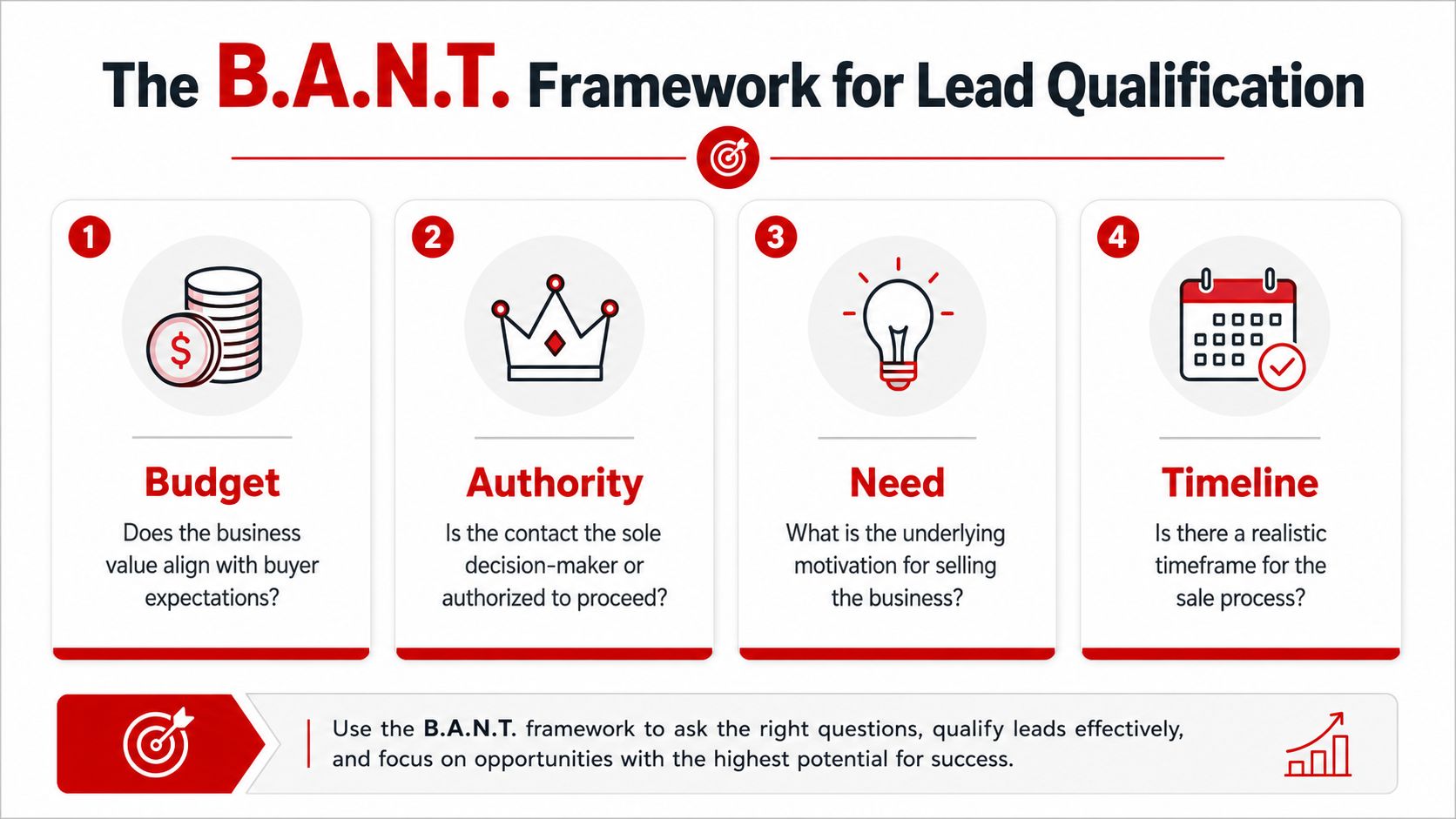
The first screen can stay simple. Budget, authority, need, and timeline remain useful because they force direct questions. Is the opportunity large enough to matter? Is the contact able to move? Is there an actual financing problem to solve? Is the timing real?
Qualify before chasing
Industry benchmarks show that business brokers have an average deal success rate of 30 to 40%, and a common mistake is generic outreach plus failure to re-engage past leads from an existing database, which has stronger conversion potential than cold lists, according to this business broker success rate analysis. That gives brokers two clear jobs. Improve fit early, and stop ignoring old relationships.
A practical qualification review should ask:
- Why now: What changed that made funding urgent or relevant?
- Who decides: Is the broker speaking with the actual decision-maker?
- What outcome matters: Speed, flexibility, amount, structure, or future access?
- What history exists: Has the business applied before, been declined, or used financing already?
The easiest money to miss is sitting in the old pipeline.
Track the few numbers that matter
A broker doesn't need a complicated dashboard. A few metrics tell the story:
| KPI | How to use it |
|---|---|
| Lead source | Shows which relationships and channels deserve more attention |
| Contact rate | Reveals whether response speed and messaging are strong enough |
| Conversion rate | Calculated as successful deals divided by total leads, then multiplied by 100 |
| Re-engagement wins | Shows whether the database is being treated like an asset |
The fastest way to improve results is often reworking lead handling before chasing more volume. Clean qualification, structured follow-up, and regular reactivation of older contacts turn a scattered brokerage into a stable one.
Business Lending Blueprint teaches people how to build a profitable, home-based business by becoming a business loan broker. It doesn't provide loans. It provides the training, systems, and mentorship to help entrepreneurs, professionals, consultants, bankers, CPAs, and side-hustlers launch and grow a lending business built around remote work, flexible lifestyle design, alternative lending solutions, and recurring referral relationships. For anyone ready to build a smarter, referral-driven brokerage without relying on endless cold outreach, watch the free training at Business Lending Blueprint or schedule a strategy session to see how the model works.